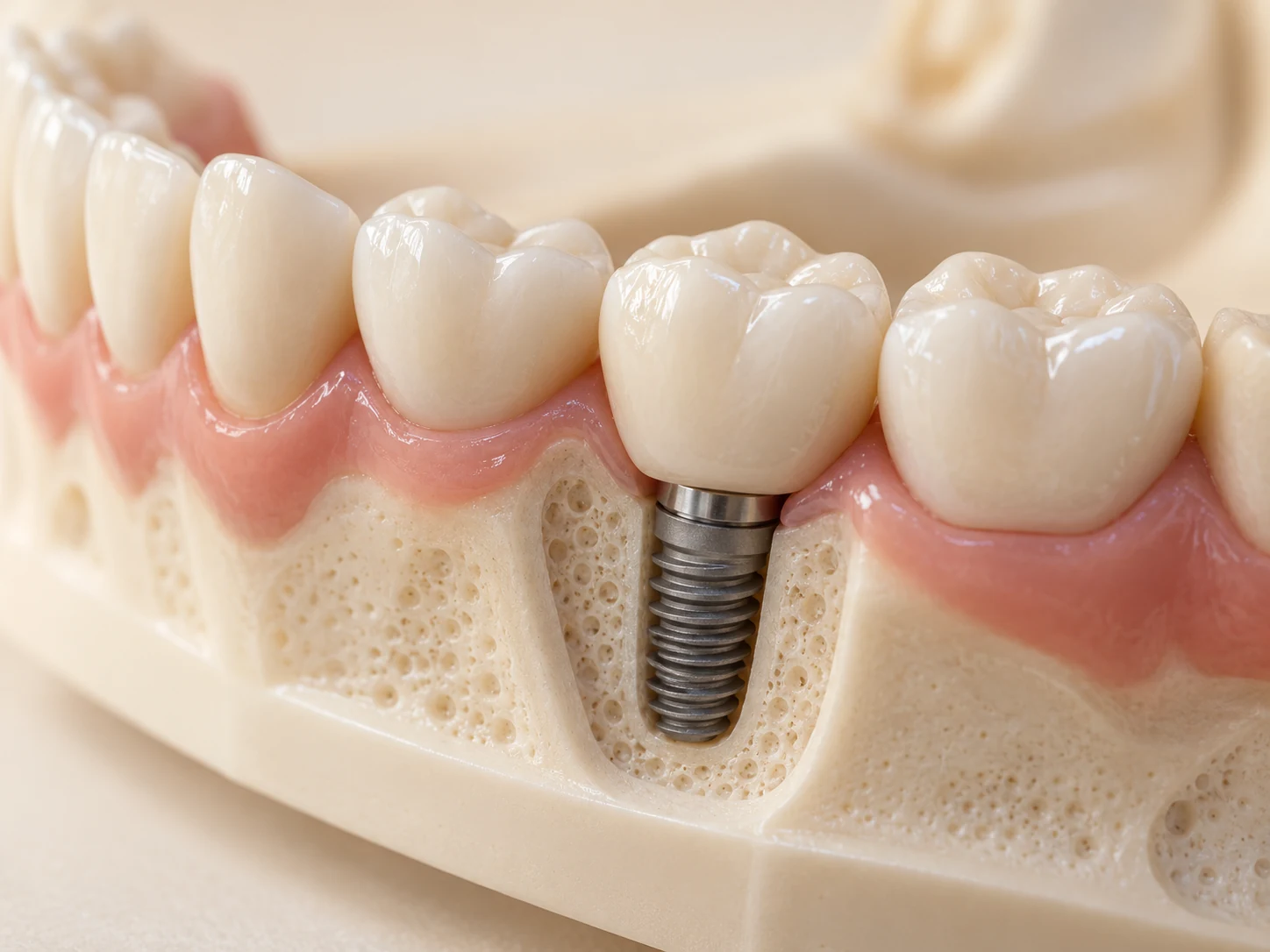
Illustrative model showing how an implant can support a replacement tooth.
A missing tooth or several missing teeth can affect eating, speech, confidence and the way the remaining teeth share forces. The most suitable option is different for each patient. The right choice depends on the number and position of the missing teeth, the health of the gums and remaining teeth, your bite, general health, priorities and budget.
On this page
What are the main options?
01 / REMOVABLE
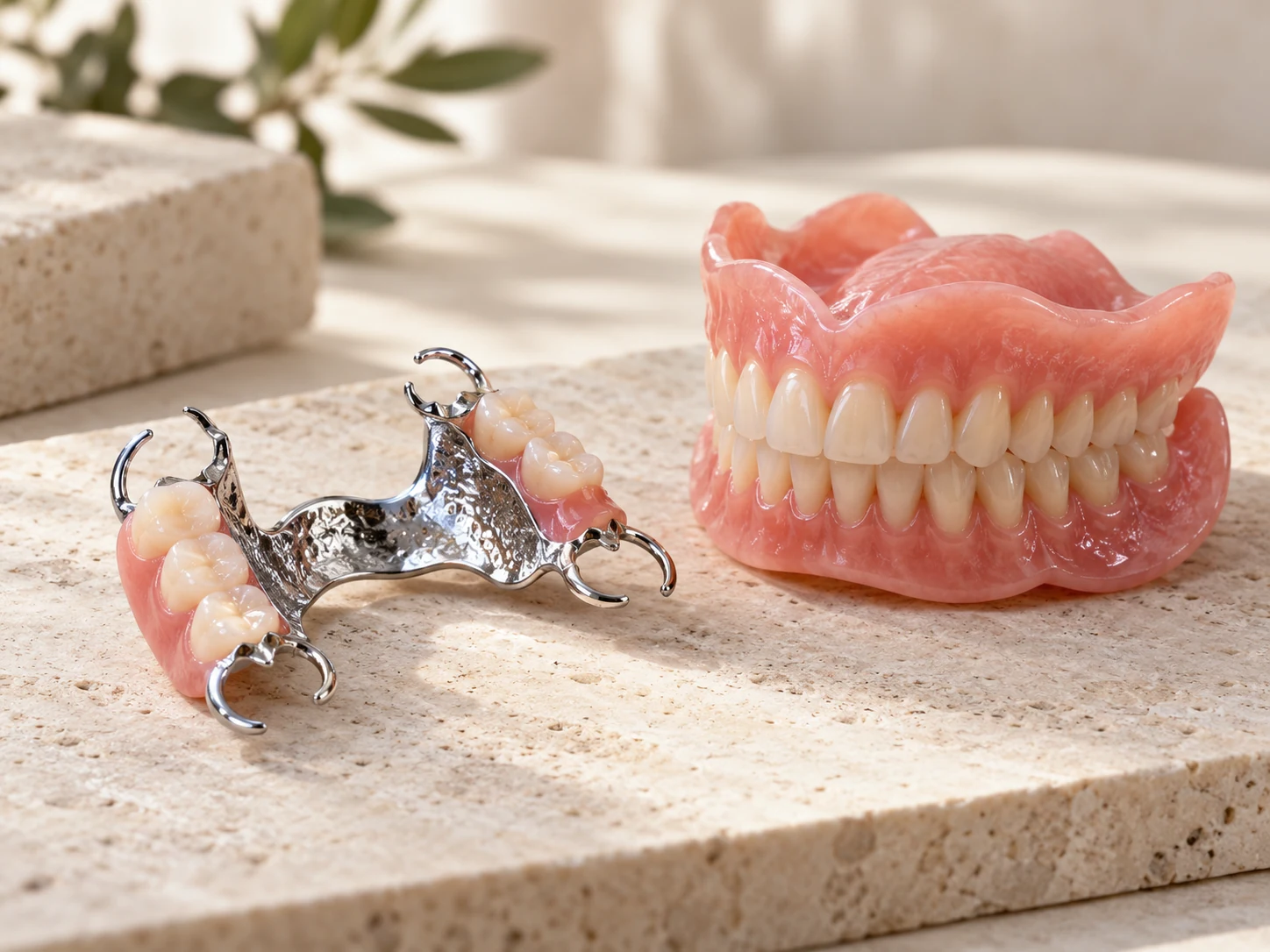
Partial or complete dentures
A denture replaces one or more teeth and is designed to be removed for cleaning. A partial denture can replace several teeth; a complete denture replaces all the teeth in an arch.
Can replace several or many teeth without surgery.
Often a practical and adaptable option.
Needs daily cleaning and periodic review as the mouth changes.
02 / FIXED
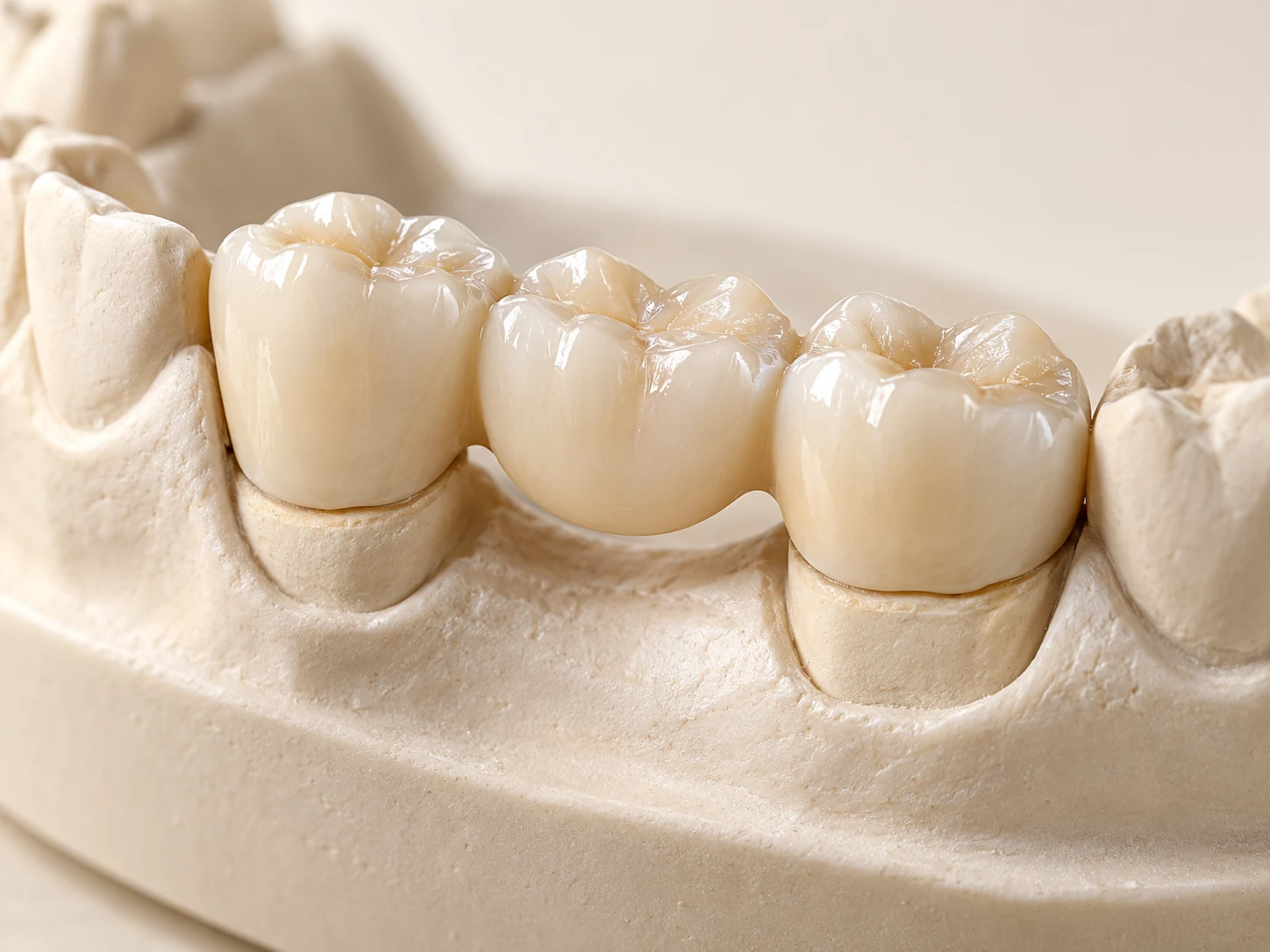
Conventional bridges
A conventional bridge is fixed to prepared neighbouring teeth, which support one or more replacement teeth. It can provide a stable, non-removable result when the supporting teeth are suitable.
Does not need to be removed by the patient.
May be useful where adjacent teeth already need crowns.
Requires careful assessment because otherwise healthy teeth may need preparation.
03 / MINIMALLY INVASIVE
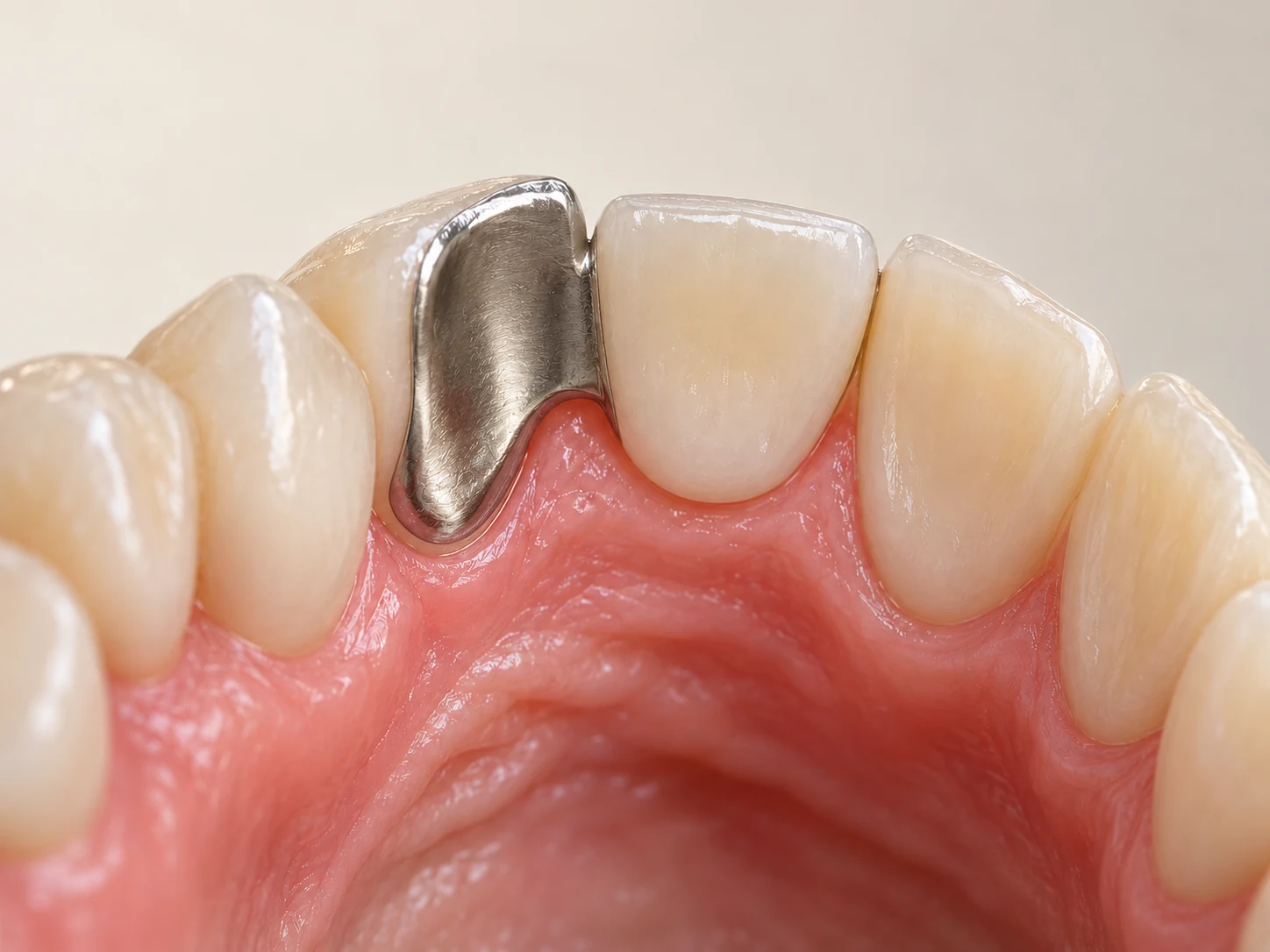
Adhesive bridges
An adhesive, or resin bonded, bridge uses an artificial tooth attached to a wing that is bonded to the back of an adjacent tooth. It can be especially useful for replacing a single front tooth while preserving tooth tissue.
Usually requires little or no preparation of the supporting tooth.
Can be a conservative way to replace a missing tooth.
Success depends on the bite, enamel, moisture control and design.
04 / IMPLANT-SUPPORTED
Dental implants
An implant is a small titanium fixture placed in the jawbone to support a crown, bridge or denture. It can replace a tooth without relying on neighbouring teeth, but it involves surgery, healing and long-term maintenance.
Can support a single crown, bridge or removable denture.
Requires sufficient bone and healthy tissues, or additional treatment first.
Regular professional and home care are essential.
How is the decision made?
At your consultation, we assess your mouth as a whole. We consider the teeth that remain, gum health, the bite, smile and facial support, available space, bone, cleaning access, treatment stages, maintenance and the alternatives. You should have time to compare benefits, limitations, risks, likely longevity and fees before deciding.
01
Understand the starting point
Examination, photographs, scans or radiographs may be used to understand the teeth, gums, bite and bone.
02
Compare realistic options
We explain the possible routes, including doing nothing for now, and how each option fits your priorities.
03
Plan the next step
If treatment is appropriate, the stages, responsibilities, costs and maintenance plan are agreed before care begins.
Questions worth asking
What are the alternatives, including a removable or adhesive option?
What would need to be done to the teeth or gums first?
How will the replacement be cleaned and maintained?
What happens if the restoration needs repair or replacement?
 01 / REMOVABLE